Why measuring PFAS removal, rather than concentration alone, could unlock more effective remediation and new ways to fund it
PFAS Credits
PFAS remediation needs a better way to measure success
PFAS contamination is spreading faster than we are removing it. Despite growing awareness, stricter regulations and increasing investments, remediation often struggles to keep pace. Much of the debate focuses on contamination limits, legislation and liability. But perhaps the biggest obstacle lies elsewhere. I firmly believe that our current way of evaluating remediation may in fact be holding remediation back.
Why PFAS remediation remains so difficult
Remediating PFAS-contaminated land is difficult for many reasons. One of the biggest is simply understanding what is happening beneath the surface. PFAS is rarely distributed evenly across a site. Concentrations can vary significantly over relatively short distances. A handful of soil samples provides only a partial picture, while extensive sampling quickly becomes expensive and time-consuming and doesn’t necessarily bring more clarity, on the contrary. Moreover, the uncertainty on PFAS measurements is still significant.
That creates an uncomfortable paradox. We invest considerable resources in measuring contamination, yet we often remain uncertain about the actual progress of remediation. Decisions become slower, remediation becomes more expensive, and many sites remain untreated because demonstrating environmental progress remains far more difficult than it should be.
Perhaps we are asking the wrong question.
How should we measure PFAS remediation success?
Most remediation projects are ultimately judged against a simple outcome: does the soil comply with a predefined threshold? That makes sense from a regulatory perspective. But from an environmental perspective, it tells only part of the story.
Imagine a contaminated site where a significant amount of PFAS has already been removed. The remaining contamination is lower, the risk of further spreading has decreased and less PFAS reaches groundwater. Yet if one or two samples still exceed the regulatory limit, discussions may quickly shift from environmental progress to whether the agreed remediation target has actually been achieved. That creates uncertainty for everyone involved, particularly when success is defined solely by a concentration threshold rather than by the amount of PFAS demonstrably removed.
Progress becomes difficult to recognize.
A different perspective would ask another question: how much PFAS has actually been removed from the environment? That question makes ongoing environmental improvement measurable.
How phytoremediation makes PFAS removal measurable
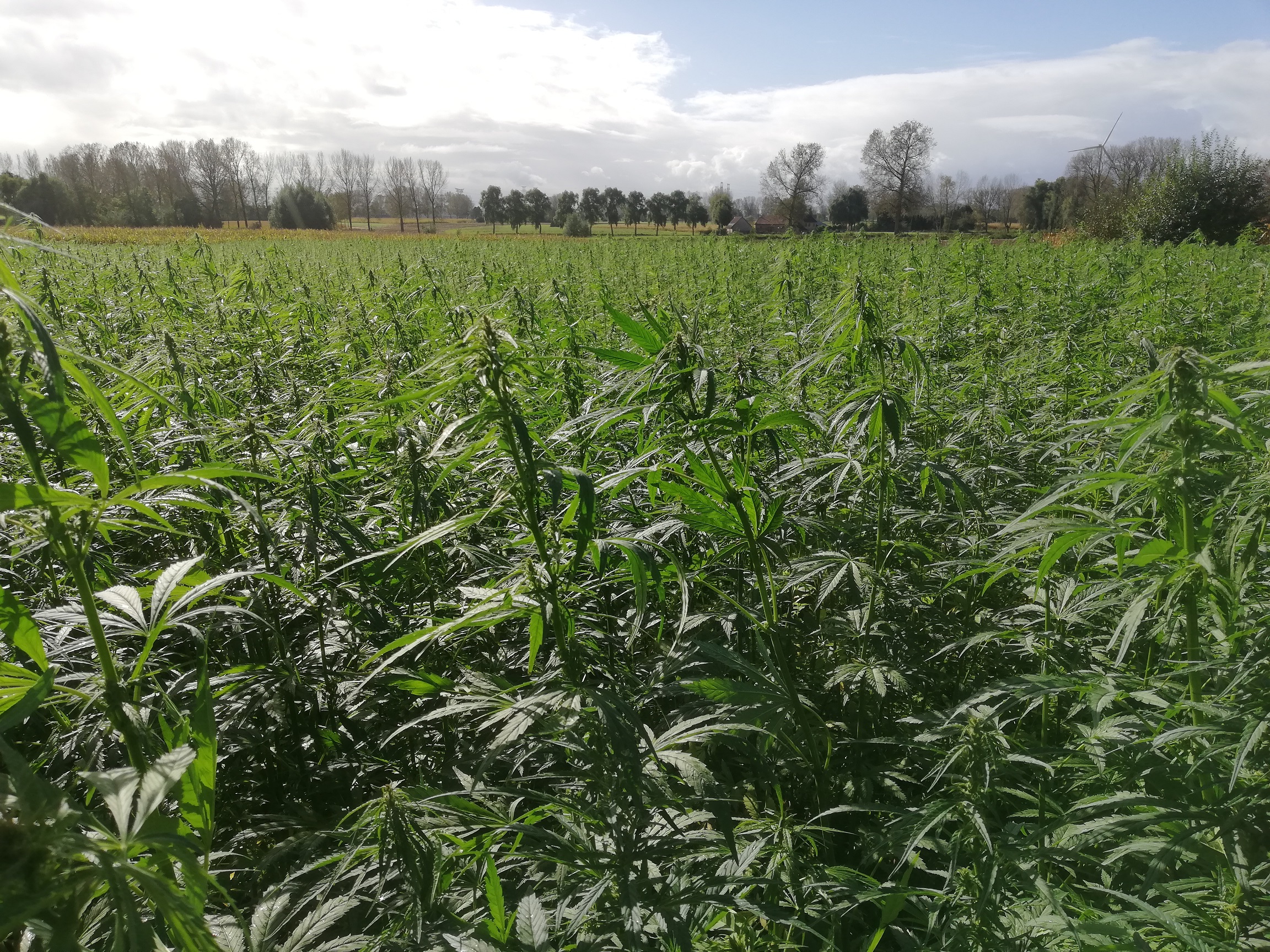
One promising aspect of phytoremediation is that plants naturally integrate PFAS uptake throughout an entire growing season. Remediation teams can measure the PFAS accumulated in plant tissue directly, a signal isolated soil samples cannot reliably give. This provides a more consistent picture of how much contamination has actually been extracted from the soil. At the same time, vegetation reduces the downward leaching of contaminated water through evapotranspiration, slowing the migration of PFAS into groundwater while remediation takes place.
This does not eliminate the need for soil measurements. They remain essential for understanding contamination and designing remediation strategies. However, it opens the possibility of measuring something that has been much harder to quantify until now: actual environmental progress.
Once progress becomes measurable, it also becomes auditable. And once it becomes auditable, new financing models become possible, including something we call a PFAS credit. More on that below.
Could PFAS credits help fund large-scale remediation?
One of the reasons carbon markets have expanded over the past two decades is that carbon can be measured, verified and assigned economic value.
PFAS presents a very different environmental challenge, with its own chemistry, risks and remediation pathways. The underlying principle, however, is surprisingly similar.
If we can reliably verify how much PFAS has been removed from contaminated land and prevented from entering groundwater, that environmental benefit also becomes measurable. Organizations responsible for PFAS emissions could fund verified removal directly, through a transparent market mechanism. Today, that cost falls almost entirely on water utilities, taxpayers and individual remediation projects.
A mechanism like this could do more than finance PFAS removal. It creates an incentive to measure environmental progress, reward measurable improvement and accelerate remediation at a scale that public funding alone is unlikely to achieve.
Rethinking how we fund PFAS cleanup
PFAS contamination will not disappear overnight. The scale of the problem is too large, and many conventional remediation techniques remain expensive and hard to deploy at scale. That makes every improvement worth counting, not just the final result.
We call this a PFAS credit: the PFAS equivalent of a carbon credit, a certified mass of PFAS removed and kept out of the environment. If it works for carbon, there is no reason it cannot work for PFAS.
We're currently testing what a PFAS credit market could look like. If you're a regulator, insurer, or polluter with a view on this, I'd like to hear it.
Get in Touch