What is nature worth to your business?
Nature has economic value.
What is nature worth to your business?
Nature has economic value. Businesses depend on healthy ecosystems for their operations, yet that value rarely appears in financial decisions. When natural systems deteriorate, companies face rising costs and greater uncertainty. Restoring those systems therefore deserves a place in business strategy.
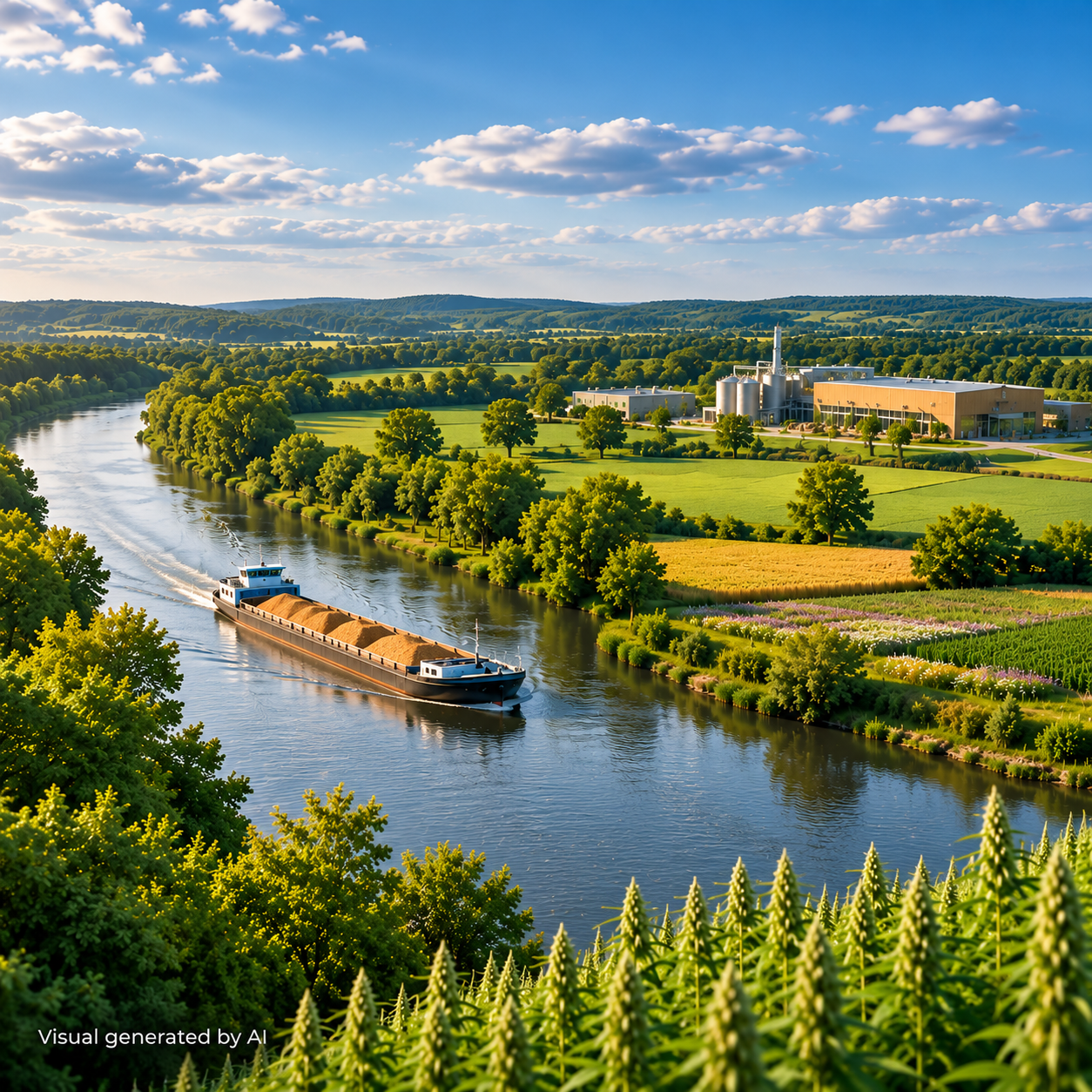
Consider inland waterway transport. Shipping goods by river is an efficient and more sustainable option for many European industries. But when drought lowers water levels like we experienced last summer, vessels can carry less cargo. Transport becomes more expensive and deliveries take longer. And to compensate for this, goods are again transported over land by fossil-fueled lorries. A change in the natural environment has a direct impact on the bottom line.
How should businesses account for the natural systems on which their profitability depends?
How healthy ecosystems support business operations
Economists use the term ecosystem services to describe the benefits that nature provides. Fertile soil supports food production, while healthy watersheds help regulate the availability and quality of water. These ecosystem services have an economic value, even when no one pays directly for them.
A company knows how much it spends on equipment maintenance or energy. The contribution of a healthy ecosystem is harder to express in financial terms. As long as natural resources remain available, their condition receives relatively little attention in investment decisions.
The economic value of nature also depends on the connections between natural systems. Degraded soil retains less water, affecting the ability of farmland to withstand dry periods. The resulting pressure on agricultural production reaches food processors and retailers through their supply chains. Hence, there is a clear incentive for healthy soils.
How environmental degradation affects business costs
The economic consequences of environmental degradation often become visible only after damage has occurred. Take a food manufacturer that depends on agricultural raw materials. Prolonged drought reduces harvests and increases competition for available supplies. The manufacturer faces higher purchasing costs and potentially less predictable deliveries.
Businesses can calculate the financial consequences of disrupted production or higher purchasing costs. Assessing the value of the natural systems that help prevent those disruptions is more difficult. Companies can begin by identifying which ecosystem services their operations depend on, where those services are under pressure and what the financial consequences of their deterioration could be. It is similar to a risk assessment of a chemical to public health.
Environmental degradation also creates risks that extend beyond individual companies. When water scarcity affects an entire region, businesses compete for the same limited resource. Measures taken by one company offer little protection if the underlying ecosystem continues to deteriorate.
The economic opportunities of nature restoration
Land restored to productive use can support the cultivation of renewable biomass. When that biomass enters industrial value chains, it generates additional value for growers and manufacturers. The economic potential of biomass production depends on land management practices that also support soil health and biodiversity.
Nature restoration requires a systemic approach that goes beyond carbon sequestration. Changes in land use also affect biodiversity and water availability. Assessing the environmental and economic value of a restoration project therefore requires an understanding of how it affects the wider ecosystem.
How can we make nature restoration economically viable?
The benefits of nature restoration are often shared by parties who do not contribute to its cost. A farmer investing in healthier soil may improve the reliability of supply for food manufacturers. Better water retention may also benefit the surrounding area. Yet the farmer bears much of the initial investment. This imbalance can discourage restoration projects, even when they offer substantial benefits beyond the landowner.
Businesses therefore have a role to play in developing models that reward those who restore natural systems. Long-term purchasing agreements, for example, could give growers greater confidence to invest in regenerative practices when buyers are willing to recognise the value of more resilient production.
Another source of revenue comes from the environmental benefits of restoration. Eligible carbon removal or sequestration projects can generate carbon credits under recognised certification schemes, providing an additional financial incentive for landowners and investors. Revenue from biomass production offers another opportunity. Connecting growers with industrial buyers helps create demand for biobased materials and strengthens the commercial prospects of restoration projects.
At Earth+, we are working to connect land restoration with viable economic activities. By bringing together landowners, restoration partners and industrial companies, we aim to create value chains in which restored land can supply renewable raw materials for applications such as biobased construction products. We also support the transition to regenerative agriculture, helping growers build more sustainable food production systems that are better equipped to withstand the effects of climate change. Both routes give businesses a way to invest in nature restoration while supporting the development of a regenerative economy.